

It was the 16th Annual Febb Burn Banquet, also referred to as the 2026 Febb Burn Dinner. Rachel Sussman, lead producer of the Broadway musical Suffs, was the keynote speaker.
KNOXVILLE, Tenn. (Smokies.LIVE Information Center) — The right of millions of American women to vote was secured in large part because of a pivotal decision made right here in East Tennessee.
More than a century later, community leaders and women’s suffrage advocates are working to make sure that history is not forgotten, including efforts to establish a museum in Knoxville dedicated to preserving the story of the women’s suffrage movement.
The historical significance of East Tennessee was front and center during a gathering marking the 106th anniversary of the ratification vote that led to the passage of the 19th Amendment.
On Aug. 18, 1920, Tennessee became the 36th state needed to ratify the amendment, securing women’s constitutional right to vote. The deciding vote came from 24-year-old state Rep. Harry T. Burn of Niota, who had initially opposed women’s suffrage.
Burn changed his vote after receiving a letter from his mother, Febb Ensminger Burn, urging him to support the amendment.
That single vote ended a 72-year national struggle for women’s voting rights.

The battle had involved generations of activists, thousands of letters, public demonstrations, legislative hearings and years of political opposition.
Knoxville Mayor Indya Kincannon highlighted the significance of the East Tennessee connection and the personal courage behind the historic decision.
Burn faced immediate backlash after casting his vote. A riot broke out inside the state Capitol, and he reportedly had to hide in a closet for hours before it was safe to leave. Opposition continued even after he returned home to Niota, where community members helped protect him.
The story is one that local advocates, including Wanda Sobieski, want future generations to understand.
The suffrage movement also used powerful visual symbols to draw attention to its cause. Supporters wore white and carried gold, white and violet banners during marches and demonstrations. The colors helped the movement stand out at a time when women were fighting to have their voices heard.
Rachel Sussman, lead producer of the Broadway musical “Suffs,” served as the event’s keynote speaker. The production, which earned two Tony Awards, tells the story of the women who fought for the right to vote.
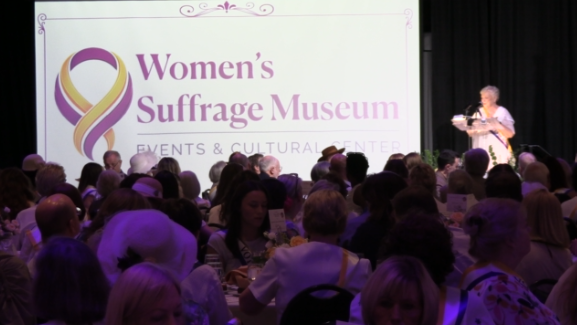
Sussman said she became interested in women’s suffrage as a middle school student and spent years learning about the movement.
She described the suffragists as courageous pioneers whose demonstrations and protest strategies helped shape the way Americans advocate for change today.
The activists organized without social media, cellphones or modern communication tools, relying instead on letters, public appearances, marches and personal connections to build support.
Sussman said she hopes people leave the celebration recognizing how far the country has come while also considering how they can help create a better future.
The effort to preserve this history is especially meaningful in East Tennessee, where one young lawmaker’s decision helped change the course of American history.
The 19th Amendment did not end every barrier to voting, but its ratification marked a defining moment in the country’s democratic history. The right to vote for millions of women was made possible, in part, by a mother’s letter and a decisive vote cast in Tennessee.

2 Responses
I cherish my right to vote but there’s more to it you should study and review each candidate and whatever is on the ballot don’t know if you don’t know what your voting for
Yes you need to know who you are voting for.