

New sightings near Kuwohi Road and Chimney Tops Trail fuel hopes the animals may linger in the Tennessee area.
(KUWOHI, Tenn.) SMOKIES.LIVE — New elk sightings across the Great Smoky Mountains National Park are drawing attention from wildlife enthusiasts after several animals were spotted in areas where elk are seen less frequently.
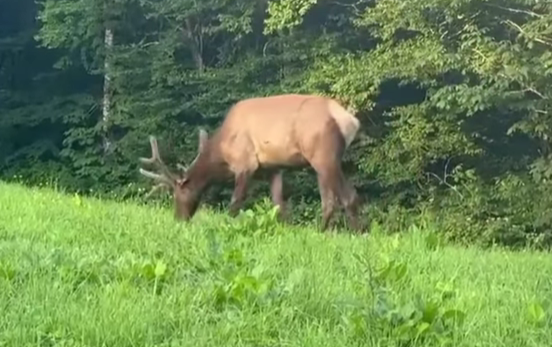
Two elk were recently observed along Kuwohi Road near the Appalachian Trail, about 1½ miles from the observation road entrance. An additional female elk, or doe, was spotted near the Chimney Tops Trail.
The sightings come just a few weeks after three elk were seen in the Townsend area, prompting residents and visitors to search for the animals in hopes of catching a glimpse or photographing them. Some observers have questioned whether the elk will remain in the area or eventually migrate back toward the park’s established herd this fall.

Local wildlife photographer Barry Spruce photographed the two elk last month near the Townsend Wye after learning from a friend that they had been seen nearby.
“Everyone I talked to said they didn’t know where they went,” Spruce said. “So, my idea first was to look in the rivers and the creeks because at the Townsend Wye there are three different water sources. You’ve got Little River, Middle Prong coming in and Laurel Creek, so I went up the beginning of each of those and didn’t find them anywhere.”
Spruce said his experience photographing elk has taught him the animals often seek out relatively flat terrain where they can rest without being disturbed. After continuing his search, he eventually located the pair.
Elk were reintroduced to the Great Smoky Mountains in 2001 after being absent from the region for more than a century. Most of the park’s herd is typically found in the Cataloochee Valley in North Carolina and around Oconaluftee near Cherokee, though individual animals occasionally travel into other parts of the park.
Park officials remind visitors to observe elk from a safe distance and never approach or feed wildlife. Elk can become aggressive if they feel threatened, particularly during the fall breeding season.
No responses yet