

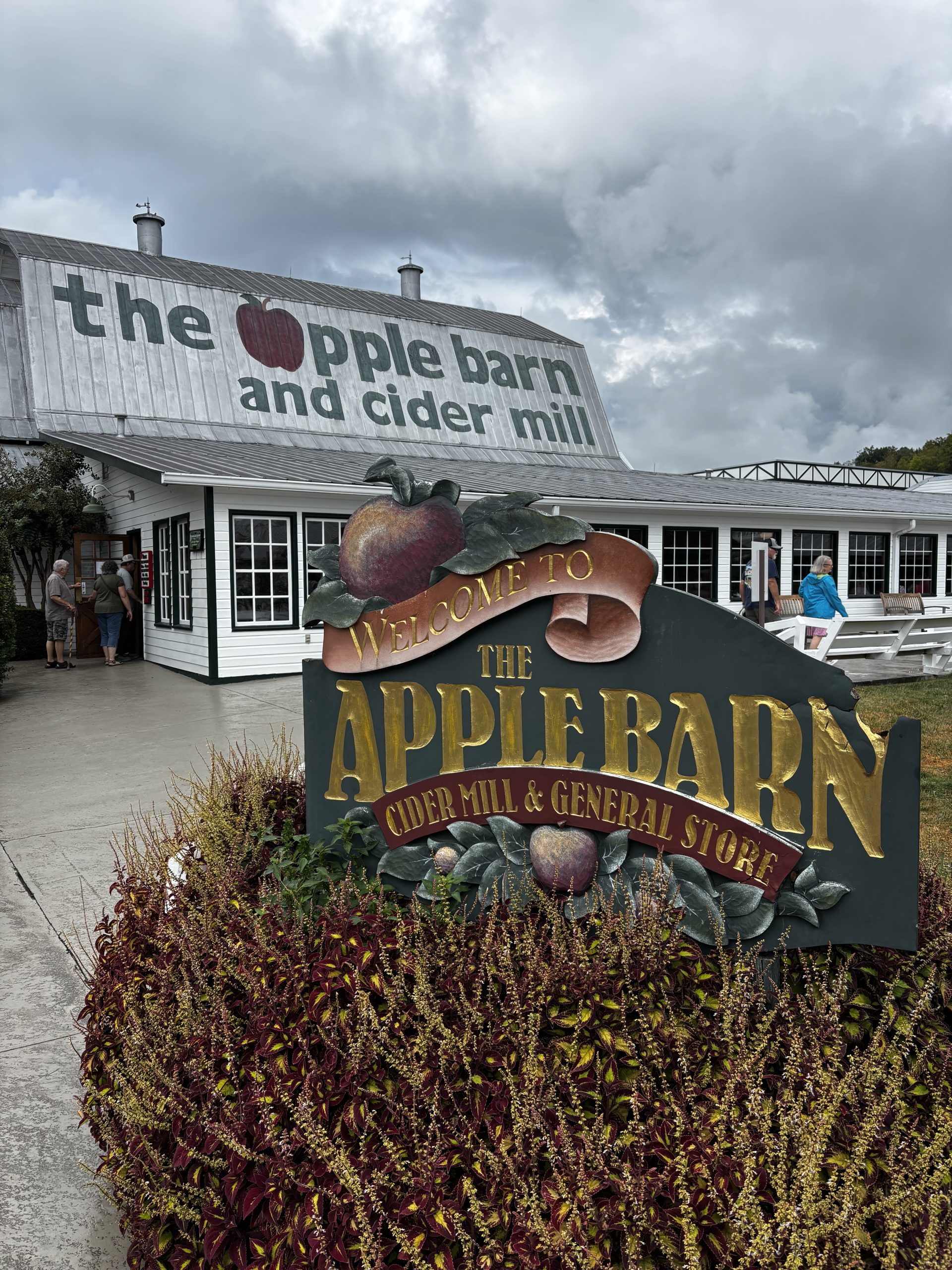
What began with four apple trees and a roadside fruit stand has grown into a family destination rooted in farming, tradition and a commitment to keeping the experience authentic.
SEVIERVILLE, Tenn. (Smokies.LIVE Information Center) — Fifty years ago, the idea was simple: plant some apple trees, sell the fruit and perhaps make a little apple cider on the side.
But for the family behind the Apple Barn, a small experiment in farming grew into something far bigger — a business that would shape their childhoods, become a destination for generations of visitors and eventually pass into the hands of the next generation.
Kent Kilpatrick still remembers how it began in the spring of 1976, when his parents, along with their friends Bon and Nancy Hicks, planted the first 4,000 apple trees on the family farm.
His father, a pharmacist who also raised beef cattle and tobacco, had not set out to build a tourism destination. The idea came after a failed tobacco crop prompted a visit from a University of Tennessee Extension agent, who discovered black shank disease in the tobacco and noticed the healthy fruit trees growing in the family’s backyard.

The agent suggested planting more apple trees and opening a roadside fruit stand.
At first, Kilpatrick’s father was skeptical. Farming apples would require years of work before the trees produced a harvest, and the drugstore remained his primary business.
Still, he planted more trees.
Then came 4,000 more.
“It was a hobby that got out of hand,” Kilpatrick said.
The decision was a gamble. Apple trees can take five or six years to produce a meaningful harvest, leaving the family to invest time and resources long before knowing what the business might become.
When the apples finally came in abundance, the family had to find ways to use them before the fruit spoiled.
They sold fresh apples from the barn, made apple cider and apple butter, and turned some of the harvest into pies. What started as a way to use the fruit became the foundation of a business that would continue to evolve over the next half-century.

No responses yet